
Early September 2026 has brought a mix of joyful coloring events, fresh wellness research, and new opportunities for coloring book creators.
In this roundup, we highlight the most useful news for families, educators, caregivers, adult colorists, and publishing entrepreneurs—and share practical ways to turn these trends into relaxing, creative moments in your daily life.
Introduction
In early September 2026, coloring made its mark across three key areas: community events, wellness research, and publishing opportunities.
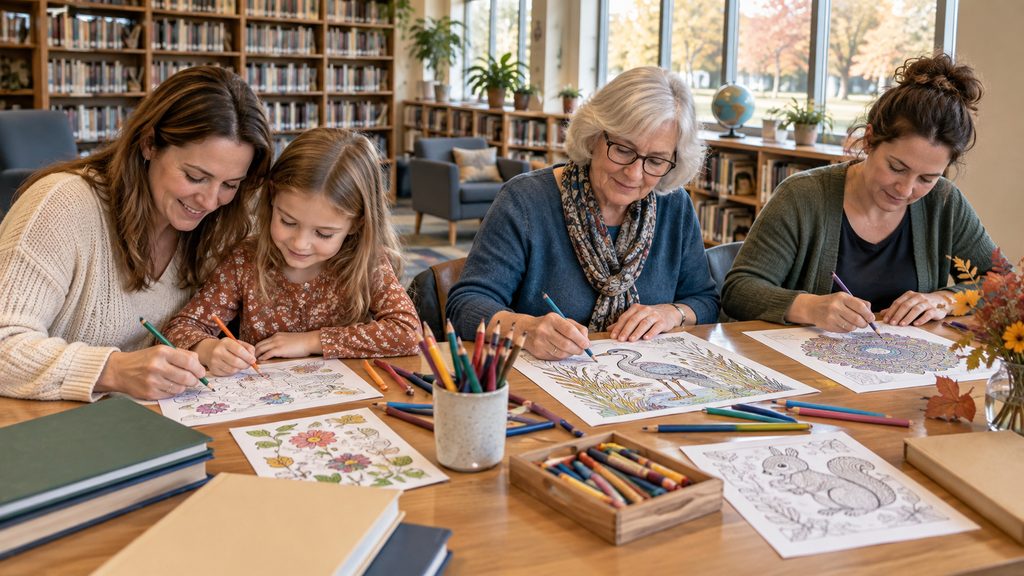
Across the United States, libraries celebrated National Coloring Day and hosted ongoing family and adult coloring programs, reinforcing coloring as a social, mindful, and accessible hobby.
Meanwhile, research focusing on mandala coloring underscored its effectiveness in reducing stress and anxiety in diverse groups—from students to medical patients.
For creators, the launch of a national submission program by ColoringBook.com opened new doors for independent publishers and authors to reach wider audiences.
Together, these developments highlight coloring as a community-building activity, a practical tool for mental wellness, and a vibrant publishing niche.
National Coloring Day and Library-Based Events
National Coloring Day on September 14, 2026, was celebrated enthusiastically by several U.S. libraries and organizations, creating opportunities for all ages to engage with coloring as an enriching creative outlet.
What Happened?
- The Coloring Museum partnered with Southfield Public Library in Michigan for a National Coloring Day Celebration, inviting community members to participate in dedicated coloring sessions.
- Brooklyn’s Highlawn Library offered a free program for children ages 5–12, providing open coloring times throughout the day.
- Los Angeles libraries hosted family-friendly coloring events, including the Grandview Library’s “Family Coloring” and LA County Library’s “Colormania: Coloring for Grown Ups,” the latter focusing on adult participants.
Why It Matters
- Educational and Community Value: Libraries connect coloring to literacy and storytelling, establishing it as more than just a child's pastime but a gateway to imagination and learning.
- Intergenerational Appeal: Programs for both children and adults illustrate that coloring is embraced as a social, inclusive activity across age groups.
- Wellness and Accessibility: Libraries legitimize coloring as a screen-free, low-cost wellness option, making it accessible for families and seniors, especially those with limited resources.
Practical Ideas for Readers
- Families: Host a mini “coloring afternoon” at home around National Coloring Day. Gather favorite books and matching printable coloring pages to encourage storytelling and creativity together. Create a “library coloring kit” with coloring tools and printables kids can bring to reading times.
- Teachers and Homeschool Parents: Set up a quiet coloring station during reading or independent study sessions, using book-themed pages to reinforce learning. Organize library field trips to connect students with community resources.
- Caregivers and Senior Activity Planners: Establish a monthly “Community Coloring Day” for residents, inviting families to participate. Collaborate with local libraries to arrange intergenerational coloring events.
Mandala Coloring and Art-Making for Anxiety and Stress
Recent research continues to demonstrate the benefits of mandala coloring and structured art-making as effective tools for managing anxiety, stress, and emotional regulation.
What the Research Shows
- A 2026 meta-analysis found that mandala-based art interventions significantly reduced anxiety and depressive symptoms compared to control groups.
- A study on digital mandala coloring revealed that university students experienced reductions in state anxiety and physiological arousal, with digital coloring performing similarly to traditional paper coloring.
- Clinical research showed that mindfulness-based mandala coloring before coronary angiography lowered patients' anxiety, stress, and cortisol levels, suggesting a non-pharmacological way to reduce medical procedure stress.
- Studies including nursing students and cardiac patients highlighted mandala coloring’s role in promoting relaxation and emotional control.
Why It Matters
- Evidence-Based Support: This growing body of research confirms structured coloring, especially mandala designs, as a scientifically supported method to ease stress and anxiety.
- Flexible Formats: Both traditional and digital coloring offer benefits, enabling people to choose the format that best fits their preferences and lifestyles.
- Integration in Care: Coloring can be a practical component of stress-management routines in healthcare and educational settings.
Practical Ideas for Readers
- Adult Coloring Fans: Try timed mandala coloring sessions of 15–20 minutes when seeking deeper relaxation. Experiment with both paper and digital mandala coloring apps to find what suits you best.
- Caregivers and Senior Planners: Use mandala coloring as a calming pre-appointment activity. Choose large-print mandalas with bold lines for accessibility.
- Teachers and Homeschoolers: Incorporate mandala coloring as a calming activity before exams or presentations. Encourage students to reflect on their stress levels before and after coloring.
Community Contests and Nature-Themed Coloring: Colorado Crane Contest
Connecting children with nature through coloring contests is a growing trend, exemplified by the Colorado Crane Conservation Coalition’s annual Crane Coloring Contest.
What Happened?
The contest invites children to color crane-themed pages available at regional libraries, with submissions due by August 7, 2026.
Winners are celebrated during a special children’s night at Bud Werner Memorial Library on September 1, with artwork displayed throughout the Yampa Valley Crane Festival held from September 1–6.
Why It Matters
- Connecting Art with Conservation: This contest fosters awareness of local wildlife through creative expression.
- Libraries as Community Art Spaces: Displaying participants’ artwork publicly boosts children’s confidence and pride.
- A Model to Replicate: The contest’s downloadable pages, deadline structure, and public exhibition provide a replicable template for education and engagement.
Practical Ideas for Readers
- Families: Organize a “nature coloring week” focused on local wildlife or changing seasons. Display artwork at home or share it on community bulletin boards to spark conversation about the environment.
- Teachers and Homeschoolers: Hold classroom or homeschool coloring exhibitions tied to nature or science themes. Combine coloring with mini research projects to deepen understanding.
- Coloring Book Creators: Develop nature or conservation-themed books linked to local events or festivals. Provide downloadable contest pages as promotional tools.
Publishing Opportunities: ColoringBook.com’s National Submission Program
September 2026 saw the launch of a new national submission program from ColoringBook.com, designed to help independent authors and publishers broaden their market reach.
What Happened?
ColoringBook.com, part of Really Big Coloring Books® in St. Louis, Missouri, opened submissions for completed coloring books to be listed, sold, and distributed through their platform and associated sales channels.
Why It Matters
- Expanding Markets: This program offers an alternative to Amazon KDP and Etsy, diversifying income channels for creators specializing in print.
- Niche Validation: The initiative highlights ongoing demand for physical coloring books, including themed and educational titles.
- Collaboration Potential: Partnering with an established distributor may lead to co-branding, larger print runs, and institutional sales.
Practical Ideas for Readers
- Coloring Book Creators and Printable Sellers: Identify titles suitable for physical distribution—such as educational series or evergreen themes. Prepare professional submission packages with clear previews and concise descriptions.
- Bloggers and Digital Content Creators: Explore and compare various platforms like ColoringBook.com, Amazon KDP, and Etsy to guide aspiring creators in finding the best distribution strategies.
What These Trends Mean for Coloring Enthusiasts and Creators
The early September 2026 developments signal several key trends:
- Coloring as Community Infrastructure: Libraries and festivals leverage coloring for social connection, literacy, and local culture.
- Evidence-Based Wellness: Mandala coloring is increasingly recognized for its mental health benefits, suitable for everyday and clinical use.
- Intergenerational Engagement: From children’s contests to adult programs, coloring is embraced across life stages.
- Expanding Creator Ecosystem: New distribution channels and steady demand confirm coloring books as a viable market niche.
These trends show coloring’s evolution into a multifaceted ecosystem that supports creativity, wellness, and entrepreneurship.
Practical Ideas for Readers
Families
- Organize a monthly Family Coloring Night with varying themes, fostering creativity and conversation.
- Use coloring as a calming activity after busy school days to encourage open sharing.
Teachers and Homeschool Parents
- Include mandala coloring breaks before exams to help students manage stress.
- Host themed coloring contests or exhibitions, linking art to science or social studies.
Adult Coloring Fans
- Join or start local adult coloring groups for social creativity and relaxation.
- Try both traditional and digital mandala coloring to find what best eases your stress.
Caregivers and Senior Activity Planners
- Introduce brief coloring sessions before medical appointments to reduce anxiety.
- Create intergenerational events incorporating simple, bold-lined coloring pages.
Coloring Book Creators
- Develop eco- or community-themed books tied to local events for partnership opportunities.
- Explore new distribution avenues like ColoringBook.com to expand your reach.
Printable Coloring Sellers
- Design library-friendly printables with reading or seasonal themes for educational use.
- Offer mandala sets marketed for stress relief, including guidance notes based on research.
Bloggers and Digital Content Creators
- Cover the relationship between coloring and mental health, citing recent scientific findings.
- Share stories on local coloring contests and events to highlight coloring’s role in community building.
Conclusion
The first half of September 2026 highlights how coloring thrives in multiple arenas—from cherished library events and nature-inspired contests to scientific studies and emerging publishing opportunities. Whether you’re gathering your family for creative time, supporting students or seniors, or planning your next coloring book project, these developments affirm the simple power of coloring as a tool for calm, connection, and creativity. Embrace these trends by joining local events, exploring mandala mindfulness, or sharing your unique creative voice—one colored line at a time.
Sources and References
- National Coloring Day Celebration
- Family Coloring at Grandview Library
- National Coloring Day — FREE | Ages 5-12
- Colormania: Coloring for Grown Ups
- Mandala-Based Art Interventions for Anxiety and Depressive Symptoms
- Digital mandala coloring as a public mental health tool
- Learning Painting and Sketching as a Therapeutic Tool
- A study to assess the effectiveness of mandala colouring on stress among nursing students
- The Effect of Mandala Coloring on Anxiety, Stress, Hemodynamic Measures
- ColoringBook.com Opens National Book Submission Program for Authors and Independent Publishers
- Crane Coloring Contest