
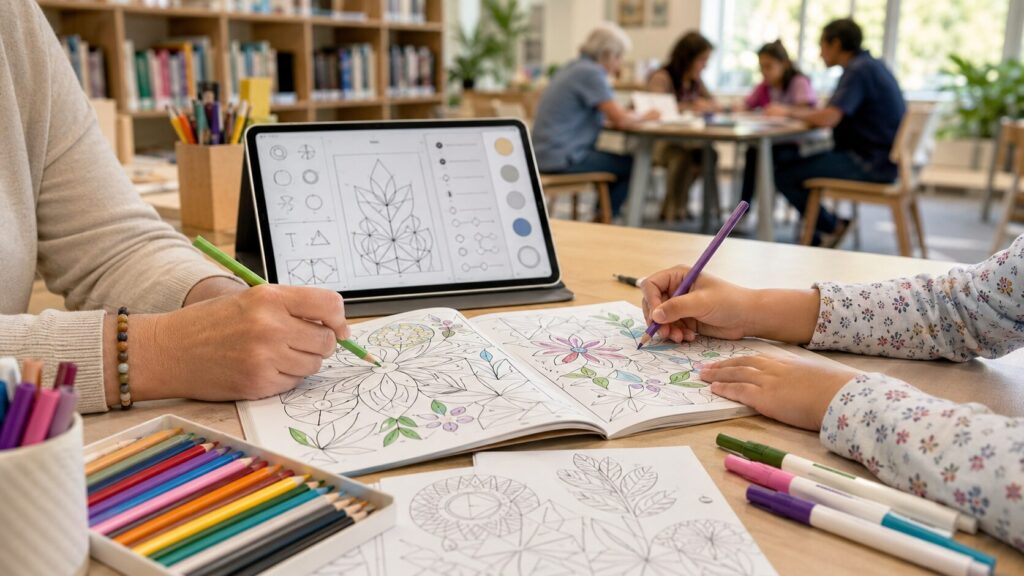
Early July 2026 brought a fresh wave of creative coloring news—from summer art sessions at libraries and museums to digital tools helping artists create printable pages.
Senior programs introduced gentle ways to engage cognition and wellbeing through coloring, while broader conversations on wellness and creativity confirmed coloring’s growing role in health and education.
This roundup highlights key trends and useful insights for families, teachers, caregivers, adult colorists, and creators.
Introduction
The first half of July 2026 reveals how coloring remains a vibrant activity connecting creativity, education, and wellbeing.
Across English-speaking countries, libraries and museums have embedded coloring into their summer programming, emphasizing inclusive art access and learning.
Meanwhile, new digital and AI tools continue to lower barriers for creators producing printable coloring pages, allowing for greater customization and thematic focus.
Even as formal research and policy increasingly recognize art activities—coloring included—as valuable for mental health and social engagement, practical programs on the ground illustrate how this creative outlet enriches daily life in diverse ways.
This update shares key developments and actionable ideas for anyone drawn to the calming, creative, and educational benefits of coloring.
Libraries Expand Hands-On Coloring and Art Programs
Public libraries in the U.S., UK, Canada, and Australia have doubled down on summer art and coloring activities.
Many institutions offer weekly or monthly "creative labs" or "art hours," where participants of all ages enjoy coloring sheets, markers, and simple crafts alongside storytime.
Such programs support literacy and encourage screen-free family bonding, while also providing adults with peaceful spaces for quiet coloring and creativity.
In the UK, the Summer Reading Challenge integrates coloring tasks into readers’ logs and posters, making the activity part of a larger educational goal.
Why this matters: Coloring is recognized as an inclusive, accessible, low-cost way to foster engagement, whether with books or community spaces.
It complements broader learning and social connection efforts.
Practical tips:
- Families: Check your local library’s calendar for drop-in coloring and craft sessions—many provide all supplies free.
- Educators: Pair weekly reading themes with related coloring sheets to reinforce literacy and vocabulary.
- Adult colorists: Create a routine "coloring hour" to enjoy mindful relaxation.
- Printable designers: Develop color sets based on popular library program themes (summer, literacy, nature) for easy sharing or donation.
Museums and Community Centers Use Coloring for Inclusive Art Engagement
Complementing libraries, museums and community arts centers continue offering coloring-based activities tied to their collections.
Printable coloring sheets inspired by exhibits simplify complex artworks, making famed paintings or historical objects approachable for families and visitors with diverse abilities.
Many museums maintain accessible “art-making studios” where children and adults reinterpret visuals through coloring, fostering art appreciation in a tactile, friendly way.
Sensory-friendly sessions also provide quiet, low-stimulation environments ideal for visitors needing gentle engagement.
Why this matters: Coloring acts as a bridge between visitors and art, breaking down barriers of difficulty or intimidation and providing educational materials for teachers and caregivers.
Practical tips:
- Families: Download museum coloring pages before visits to enhance the experience and prepare children for exhibits.
- Teachers: Integrate artwork-based coloring sheets into history or social studies lessons to deepen understanding.
- Caregivers: Use art-inspired pages for group activities that stimulate memory and conversation.
- Creators: Design public-domain art reproductions as coloring sets with educational commentary.
Digital and AI Tools Enhance Creation of Printable Coloring Pages
Throughout 2026, there’s been steady growth in digital platforms and AI technologies that generate coloring pages from photos, sketches, or patterns.
This includes features like automatic line-art conversion, mandala creation, and print-optimized exports, making it faster and easier to develop custom printable sets.
Although no major new launches occurred mid-July, numerous software updates and tutorials have refined processes around line thickness, contrast, and page layout tailored for home printing or digital sales.
Why this matters: Lowering technical barriers opens the door for more creators to produce professional-quality coloring pages, supports personalized products, and facilitates educational customization for classrooms and families.
Practical tips:
- Creators: Experiment with AI line-art generators for themed bundles or personalized coloring pages.
- Printable sellers: Offer niche, customizable products—such as pages with names or career themes—to stand out.
- Educators: Turn classroom materials and photos into engaging coloring worksheets.
- Adult hobbyists: Design pages matching your skill level or preferred motifs using digital tools.
Coloring’s Role in Creative Wellness and Mental Health
Emerging conversations in health and education highlight creative arts, including simple structured activities like coloring, as effective supports for stress relief, mood regulation, and cognitive stimulation.
This applies across populations from adults managing anxiety to older adults seeking social engagement and children developing fine motor and emotional skills.
Though new coloring-specific studies for early July are sparse, ongoing research emphasizes that regular, calming coloring sessions can be a meaningful part of self-care routines and senior programs.
Why this matters: Recognizing coloring as a wellness tool encourages more intentional incorporation into healthcare, education, and community settings.
Practical tips:
- Adults: Schedule short evening coloring breaks in a quiet, device-free space.
- Senior planners: Use large-print, high-contrast pages accompanied by discussion prompts to foster connection.
- Families: Include quiet coloring times to help children decompress after stimulating activities.
Niche Opportunities for Coloring Publishing and Printables
Marketplaces like Amazon KDP, Etsy, and Gumroad continue to support a robust ecosystem for digital and physical coloring products.
Creators find steady demand in focused niches—educational worksheets, hobby-themed books, affirmations, and seasonal packs—rather than broad generic collections.
Success relies on original, print-ready designs and clear audience targeting.
Community discussions highlight the importance of keywording, pricing strategies, and bundle offerings tailored to teachers, families, or seniors.
Why this matters: Specialized themes meet distinct needs and reduce competition, providing creators and sellers clear paths for growth.
Practical tips:
- Develop niche collections (e.g., large-print floral designs for seniors, early math coloring worksheets) aligned to your audience.
- Bundle pages by calendar events (back to school, holidays) and test market response.
- Share free samples to build trust and email lists.
Coloring Trends Reflected in Early July 2026
- Community engagement: Libraries and museums embed coloring as free, accessible creative outlets across all ages.
- Inclusion and accessibility: Coloring adapts art and education for varied abilities and comfort levels.
- Digital empowerment: AI and software tools simplify page creation, enabling personalized and themed designs.
- Wellness integration: Health professionals increasingly view coloring as a valuable mental health resource.
- Niche publishing: Targeted products resonate better with buyers, encouraging specialized content creation.
Coloring has evolved far beyond pastime status into a meaningful, multifaceted creative practice woven into education, wellness, and digital innovation.
Practical Ideas for Readers
Families
- Explore local summer coloring events and use printable art sheets to complement museum visits.
- Create a calm family coloring corner for shared quiet time.
Teachers and Homeschoolers
- Combine literature with themed coloring to enhance reading and vocabulary.
- Use museum resources to connect art and history via coloring activities.
- Generate custom worksheets using digital line-art tools.
Adult Colorists
- Set consistent “coloring appointments” for relaxation.
- Try museum-inspired or public-domain-themed coloring pages.
- Design personalized content with digital creation apps.
Caregivers and Senior Activity Planners
- Select large-print, high-contrast coloring pages featuring familiar topics.
- Pair sessions with light conversation or memory sharing.
- Partner with local centers for intergenerational coloring programs.
Coloring Book Creators and Sellers
- Focus on clear target audiences—seniors, educators, parents—with matching themes.
- Utilize AI tools to speed production and enable customization.
- Offer bundles timed to holidays and back-to-school periods.
- Provide free samples to entice customers.
Conclusion
Early July 2026 underscores coloring as a dynamic, accessible form of creativity that supports education, mental health, and community connection.
Whether at libraries, museums, senior centers, or home studios, coloring keeps inspiring people of all ages to explore, relax, and express themselves.
With growing digital tools and tailored programs, there are more ways than ever to make coloring a meaningful part of daily life.
Sources and References
- American Library Association – Programming Librarian
- American Library Association – Programming & Exhibitions
- The Reading Agency – Summer Reading Challenge
- Summer Reading Challenge – Official Website
- The Metropolitan Museum of Art – Learning Resources
- The Metropolitan Museum of Art – Curriculum Resources
- The Walters Art Museum – At-Home Art Projects and Coloring Sheets
- Australian Museum – Science Learning Resources
- Western Australian Museum – Learning Resources
- National Library of Medicine / PMC – Role of Art Therapy in the Promotion of Mental Health
- Microsoft Learn – Azure OpenAI Image Generation Models
- Amazon KDP – Content Guidelines
- Amazon KDP – Kindle Publishing Guidelines
- Etsy Help – How to Manage Your Digital Listings
- Etsy Seller Handbook
- Gumroad – Official Website