
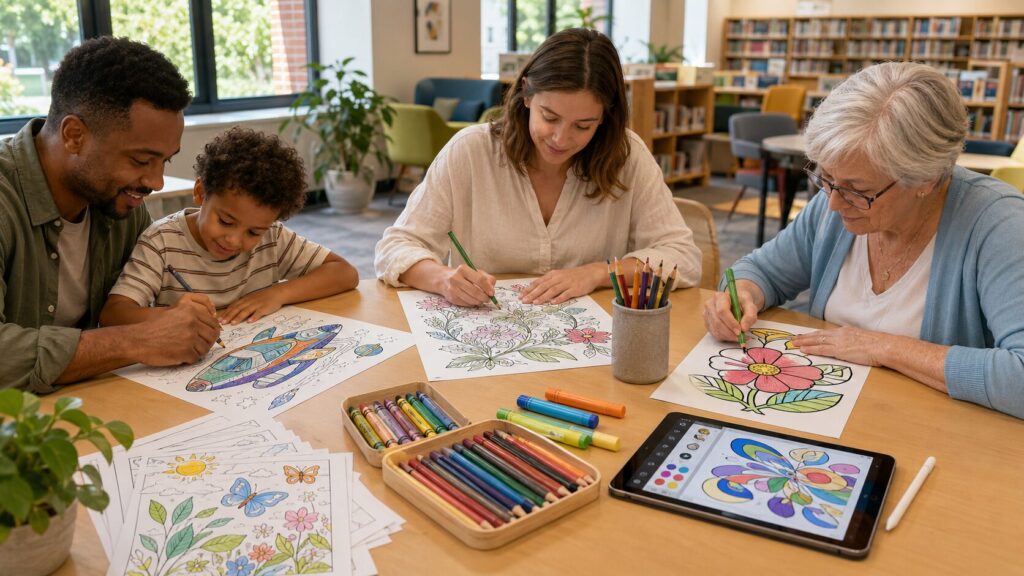
Coloring didn’t slow down in the second half of July 2026.
From new community and library activities to AI-powered printable marketplaces and ongoing research into creativity and wellness, there’s a lot happening for anyone who loves pens, pencils, and peaceful creative time.
In this roundup, we highlight late-July 2026 trends and offer practical ideas for families, teachers, caregivers, and coloring creators.
Introduction
In the second half of July 2026, coloring in English-speaking markets continued to sit at the intersection of community, wellness, and technology.
Libraries and community centers embraced coloring as an inclusive, low-cost creative activity; AI tools further normalized digital and printable coloring content; and research continued to emphasize the mental health and cognitive benefits of art-based hobbies.
Although strict date-stamped “coloring news” for July 16–31 is limited, developments and wider trends show clear directions:
- Coloring is a staple in library programs and senior care.
- Adult coloring remains widely linked to stress relief and mindful downtime.
- AI and digital tools are transforming how printables and coloring books are created and sold.
- Educators and health organizations champion creative art activities for children and older adults.
Below are the key highlights and practical insights for coloring enthusiasts, families, educators, caregivers, and creators.
Libraries and Community Spaces Lean on Coloring
In late July 2026, community calendars across the US, UK, Canada, and Australia revealed that coloring clubs and drop-in coloring sessions remain popular, especially during summer holidays.
These events are often promoted as quiet, screen-free “relax and create” times for adults, families, and teens.
Many sessions are paired with board games, craft corners, or reading challenges, encouraging a calm and creative atmosphere.
This consistency across regions highlights that coloring is a core, low-barrier creative activity embedded in libraries and community centers’ summer offerings.
Why it matters:
- Families can use these sessions as free, structured opportunities for children and adults to engage creatively during school breaks.
- Adults find in these sessions a low-pressure, social environment geared toward relaxation.
- Educators and caregivers can model these informal, easy-to-run coloring groups in schools or care facilities.
Practical ideas:
- Families: Create your own weekly “quiet coloring hour” at home with simple supplies and printed pages—keep it screen-free.
- Teachers: Introduce “open studio” coloring time at a calm moment during the school day to help students transition between activities.
- Caregivers: Set up a “library corner” in care homes or community centers with coloring pages, large-print books, and gentle background music to encourage relaxed engagement.
Ongoing Focus on Art, Coloring, and Mental Health
Leading institutions and health organizations continued to endorse creative art activities, including coloring, as tools for stress relief and mental wellbeing.
Associations such as the American Art Therapy Association emphasize structured art as a way to support emotional expression and reduce anxiety.
Popular health platforms also recommend coloring as an accessible mindfulness practice.
For seniors, gerontology and dementia care experts promote coloring and simple art projects to support cognitive stimulation and social engagement in residential or day care settings.
Why it matters:
- Adult coloring enthusiasts benefit from scientific backing that links their hobby to mental health benefits.
- Caregivers and senior activity planners can integrate coloring confidently into schedules designed for cognitive and social wellbeing.
- Educators and parents can position coloring as a tool for emotional regulation and mindfulness, not just a pastime.
Practical ideas:
- Pair coloring with simple breathing exercises—try five deep breaths followed by five minutes of focused coloring.
- Use emotion-themed pages (such as calm, hope, or gratitude) to invite family members or students to select and color an image reflecting their mood.
- For seniors or those with visual or motor challenges, offer high-contrast, simple designs and thick markers to make coloring more accessible.
AI Tools and Digital Coloring Content
By late July 2026, AI platforms and creative marketplaces in English-speaking regions had made it increasingly easy for creators to produce printable coloring pages and digital coloring books via text prompts.
Policy updates throughout July refined how these tools support creative content generation, govern intellectual property, and manage monetization.
Platforms such as Etsy and Gumroad showed a growing number of listings labeled “AI-generated coloring pages,” often sold as instant digital downloads for home printing or tablet coloring apps.
Why it matters:
- Product creators can rapidly prototype new themes and niche ideas, such as profession-specific or local landmark designs.
- Hobbyists have access to a wide range of intricate or custom-themed coloring pages.
- Teachers and homeschool parents can quickly find or create curriculum-aligned activities (e.g., life cycle diagrams or geographic maps) for educational use.
Practical ideas:
- Creators: Use AI to generate rough line art, then refine it manually to improve clarity and print quality.
Clearly indicate AI involvement while adding original, hand-drawn details to stand out. - Teachers: Generate themed pages that combine coloring with labeling or short written questions to reinforce learning.
- Adult colorists: Experiment with AI-generated pages for fresh styles but curate a personal archive of preferred designs to revisit over time.
Printable Market and Self-Publishing Momentum
The broader market for printables and digital products—coloring pages included—remained robust in English-speaking countries during this period.
Sellers on Amazon KDP, Etsy, and Gumroad continued to offer low-cost niche products like seasonal coloring sets, mindfulness and affirmation pages for adults, and educational activity packs for children.
Guides for sellers emphasize evergreen demand for:
- Seasonal and holiday-themed coloring pages (summer, back-to-school, Halloween).
- Mindfulness and affirmation pages targeted at adult relaxation.
- Educational materials for early learners and homeschoolers.
Why it matters:
- Side-hustle creators can enter the digital product market by offering manageable coloring page packs.
- Bloggers and digital content creators can use free or low-cost coloring printables to engage audiences and build mailing lists.
Practical ideas:
- Start small with themed packs of 10–20 pages before investing in full books.
- Offer both print-ready PDFs and free samples to encourage trial and customer confidence.
- Tailor product descriptions to specific use cases like “calming classroom corners,” “family game night,” or “senior activity groups.”
Trends Shaping Coloring in July 2026
From libraries and senior care facilities to digital marketplace innovation, several trends in late July 2026 show how coloring continues to evolve:
- Institutional adoption: Coloring is now standard programming in libraries, schools, and care centers.
- Wellness focus: Mindful adult coloring and caregiver recommendations highlight emotional and cognitive benefits.
- Digital transformation: AI-generated art and printables are mainstream tools for creators and learners.
- Education and development: Coloring remains vital for motor skills, cognitive stimulation, and classroom differentiation in children and seniors alike.
For readers of Dream Coloring Journey, your engagement with coloring connects to wider social, educational, and technological currents, reflecting a vibrant and growing creative ecosystem.
Practical Ideas for Readers
Families
- Host weekly family coloring nights where everyone shares favorite colors and stories behind their creations.
- Keep a "grab-and-color" basket stocked with pencils and printed pages for easy, screen-free creative breaks.
Teachers or Homeschool Parents
- Use coloring as calm entry or exit tasks to help students focus or unwind.
- Develop curriculum-linked coloring packs that recycle key concepts year after year.
Adult Coloring Fans
- Build a mindfulness routine pairing 10–15 minutes of coloring with quiet music or meditation.
- Blend traditional media with digital prints by coloring AI-generated pages with your favorite pencils.
Caregivers or Senior Activity Planners
- Schedule group coloring circles around simple themes, using coloring as a prompt for gentle conversation.
- Provide large-format, high-contrast images with wide spaces to accommodate reduced dexterity or vision.
Coloring Book Creators
- Employ AI as a starting point but maintain strong manual refinement and unique design elements.
- Test the market with small themed packs and solicit audience feedback on style and complexity.
Printable Coloring Product Sellers
- Create products tailored to clear real-life use cases such as calming corners or reminiscence activities.
- Experiment with pricing bundles and sample offerings to maximize customer engagement and feedback.
Bloggers or Digital Content Creators
- Offer free coloring samples to grow mailing lists and follow with themed paid packs.
- Pair coloring with journaling prompts in blog content to attract both creative and personal growth audiences.
Conclusion
Coloring in late July 2026 is far more than a pastime—it’s a community activity, a wellness practice, an educational resource, and a thriving digital product category.
Whether your passion lies in personal relaxation, teaching, caregiving, or creative production, you are part of a vibrant and evolving creative ecosystem.
As you explore new pages—whether hand-drawn, AI-assisted, or community-provided—may each line and color bring calm, joy, and connection to your daily life.