
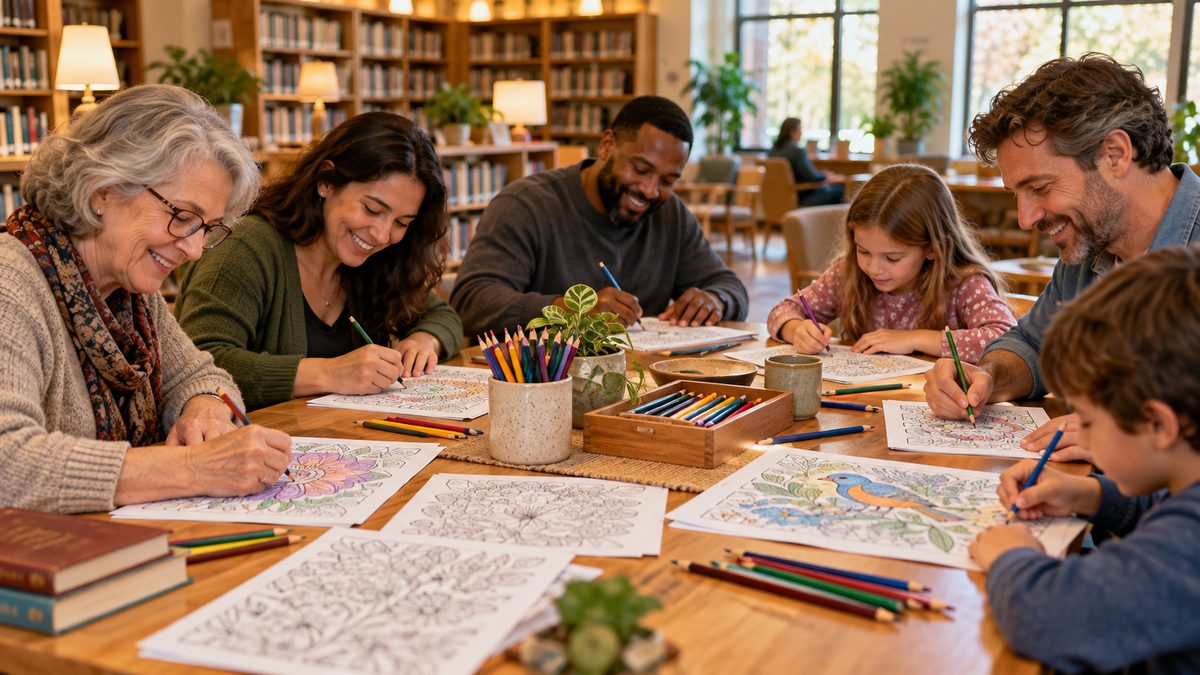
Late September brought a colorful mix of library gatherings, family art activities, adult coloring sessions, and new creative inspiration.
Discover how communities are using coloring for relaxation, connection, learning, and screen-free enjoyment—and find practical ideas to try at home, in the classroom, or in a care setting.
Introduction
The second half of September 2026 reaffirmed coloring’s role as a valued creative outlet blending art, relaxation, education, and social connection.
Across English-speaking communities, libraries and cultural centers offered coloring sessions for different age groups, while fresh coloring-book releases provided new seasonal and themed options.
Rather than a single groundbreaking event, the highlight was the ongoing embrace of accessible, low-pressure creative time.
Coloring opportunities were often free or low-cost, easy to join, and friendly to both beginners and experienced colorists alike.
This approach makes coloring particularly suitable for families, educators, caregivers, older adults, and anyone in search of an enjoyable screen-free pastime.
Libraries as Community Coloring Hubs
Several U.S. libraries hosted coloring activities in late September, underlining a popular trend of using coloring to foster community and wellness.
For example, the Aiken County Public Library in South Carolina held a "Coloring for Grownups" session inviting attendees to bring colored pencils and felt pens.
Meanwhile, Albuquerque’s International District Library combined coloring and coffee for a relaxed social event, and Miami-Dade Public Library’s “The Color Bunch” offered group art-making with crayons and coloring pages.
These events emphasize coloring’s accessibility.
They require minimal preparation and materials, encourage informal socializing, and remove pressure to produce “perfect” art.
That makes them easy and welcoming creative outlets for a wide audience.
Practical ideas inspired by library events:
- Host a simple home “coloring café” with tea, coffee, or cocoa served alongside coloring.
- Gather family members around the same table to color together with soft background music.
- Organize a neighborhood or classroom coloring hour with shared supplies.
- Provide a variety of page styles — from simple designs for beginners to detailed patterns for experienced colorists.
Adult Coloring: A Space for Calm and Focus
Adult coloring programs continue to resonate as quiet, restorative activities.
Aiken County Public Library scheduled a “Coloring for Grownups” session on September 17, while Albuquerque’s International District Library offered “Coloring and Coffee” on September 24 as a relaxed drop-in activity with coloring pages and supplies provided.
These programs present coloring as an accessible leisure activity rather than a test of artistic skill.
Participants can spend quiet time with color while also having the option to socialize in a low-pressure setting.
Practical tips for adult colorists:
- Use a 20-minute coloring break to transition from work or other responsibilities to relaxation.
- Pick coloring pages that align with your energy—broader shapes when tired; detailed patterns when seeking concentration.
- Keep a portable coloring kit for moments on the go, such as travel or waiting rooms.
- View completed pages as a personal record of restful time, not as an artistic standard.
Family and Children’s Coloring Programs Foster Shared Creativity
Family-oriented coloring events remain popular, encouraging creative time that spans generations and developmental stages.
An example is the fall Family Saturdays at L’Alliance New York, which offered library coloring tied to storytelling, cultural themes, and art exploration.
Such programming supports independent work by children alongside adult participation and discussion, enriching the experience for all.
Coloring’s flexibility lets younger kids practice basic skills while older children add complexity, captions, or related research.
This multi-layered approach helps families engage meaningfully through shared creativity.
Practical ideas for families and educators:
- Pair coloring pages with related picture books, museum themes, or seasonal stories.
- Let children choose their own colors, encouraging self-expression over perfection.
- Ask open-ended questions like “What do you see happening in this picture?” to spark imagination.
- Display finished artworks together to form a family gallery celebrating creativity.
New Coloring Books Offer Seasonal Themes and Varied Audiences
September saw new coloring-book releases focused on kindness, fall motifs, Halloween-style imagery, mystery, and popular characters.
This diversity highlights the continued use of thematic coloring books to match different moods, occasions, and target groups.
For example, kindness-themed collections suit classrooms or families nurturing empathy, while autumn and spooky themes appeal to seasonal enthusiasts.
Books featuring familiar characters continue to attract collectors and hobbyists.
Practical suggestions for using or creating themed coloring books:
- Assemble a seasonal coloring basket featuring autumn leaves, harvest scenes, cozy interiors, or gentle Halloween designs.
- Use kindness-themed pages as prompts for children to write notes or identify helpful actions.
- For creators, study successful books’ clear themes and distinct audiences to guide development.
- Include both complex and simple pages in collections to accommodate adults and families.
What These Trends Mean for Coloring Enthusiasts and Creators
Late September’s coloring news points to several ongoing trends shaping the coloring landscape:
- Social engagement: Coloring brings people together informally, whether at libraries, community centers, or home gatherings.
- Adult leisure: Adult coloring remains a valued pastime offering relaxation, focus, and gentle social interaction.
- Family inclusiveness: Coloring activities comfortably span age groups, blending skill-building, storytelling, and creative expression.
- Theme diversity: A broad range of themes engages different emotions, interests, and audiences.
- Portability: Compact, well-organized coloring kits and supplies make it easy to integrate coloring into daily life.
- Informed creation: Public programs suggest that printable products should be user-friendly, beginner-friendly, and adaptable for groups or families.
Practical Ideas for Readers
- Families: Set aside a regular screen-free evening combining coloring with stories, music, or conversation.
- Teachers and homeschoolers: Use coloring pages to introduce new vocabulary, science concepts, geography, history, or emotional learning topics.
- Adult colorists: Try short, frequent coloring sessions instead of waiting for large blocks of free time.
- Caregivers and seniors: Provide high-contrast pages, generous shapes, comfortable coloring tools, and optional conversation prompts.
- Coloring book creators: Design collections with clear audiences and purposes, such as cozy relaxation, seasonal family fun, or kindness education.
- Printable product sellers: Offer clear previews, practical page sizes, and varied difficulty levels; test pages for home printers and common paper types.
- Bloggers and digital creators: Cover local coloring events, share supply reviews, and demonstrate how one coloring page can suit a range of ages.
Conclusion
Late September 2026 confirmed that coloring remains a vibrant, accessible creative activity across English-speaking communities. From library tables and family rooms to adult relaxation sessions and new themed books, the strongest message is one of inclusivity and ease.
You don’t need elaborate art supplies or advanced skills. A printed page, a handful of favorite colors, and a bit of quiet time can create a meaningful pause—whether coloring alone, with family, in classrooms, or as part of a community.